Colombia mission, ZEROWEB care & $2B FDI into Korea. GDIN and Comfamiliar Explore Digital Health Corridors for Latin America |
|
|
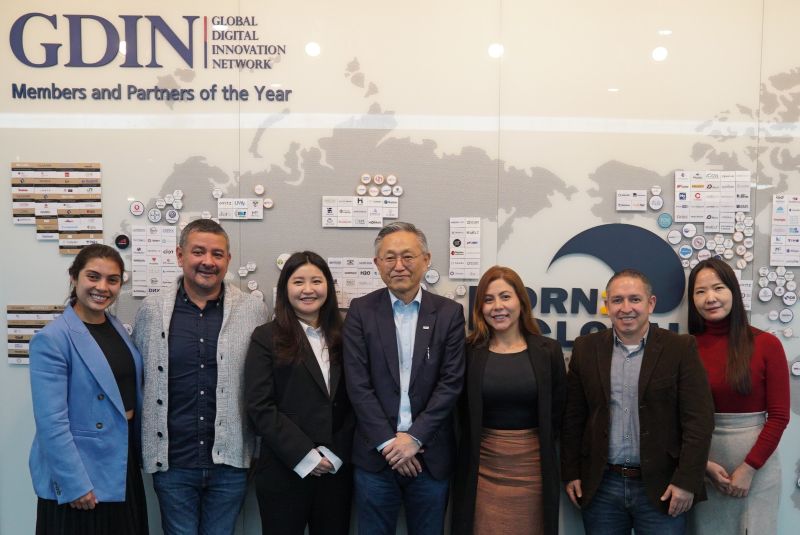
GDIN hosted an institutional delegation from Comfamiliar Risaralda, Colombia’s premier social welfare and healthcare institution, at the Pangyo Startup Campus to structure strategic deployment pathways for Korean digital health solutions in South America. The bilateral dialogue focused on resolving chronic infrastructure deficits and medical disparities across underserved Latin American regions by establishing inclusive, technology-driven preventive care models.
🌐 Deploying Integrated Diagnostic Hubs via Multilateral Frameworks
The session evaluated actionable mechanisms to scale digital medical infrastructure in alignment with multilateral development bank (MDB) initiatives, such as the Inter-American Development Bank (IDB):
-
Inclusive Care Infrastructure: GDIN CEO JongKap Kim presented a strategic blueprint to bundle specialized Korean diagnostic and telemedicine platforms into localized "regional digital check-up hubs." This packaged architecture is designed for agile deployment across regions lacking foundational medical facilities.
-
Sustainable Economic Calibration: Addressing viability parameters raised by Comfamiliar’s Medical Director Mario Alberto Cepeda, the dialogue centered on structuring sustainable financing frameworks. Key priorities included calibrating service unit costs to align with regional income levels and ensuring seamless operational integration with existing public-private healthcare networks.
⚙️ Clinical Data Synergy & Enterprise PoC Validation
To translate these strategies into tangible enterprise deployments, the working session emphasized the requisite fusion of hardware, software, and local telemetry:
-
Cross-Border Epidemiological Integration: Highlighting that pure technological transfer is insufficient for long-term viability, CEO Kim outlined a collaborative framework. The initiative aims to combine the cost-efficiency of Korean health-tech with localized clinical datasets—specifically targeting regional endemic conditions like malaria—to build a culturally and medically adapted digital infrastructure.
-
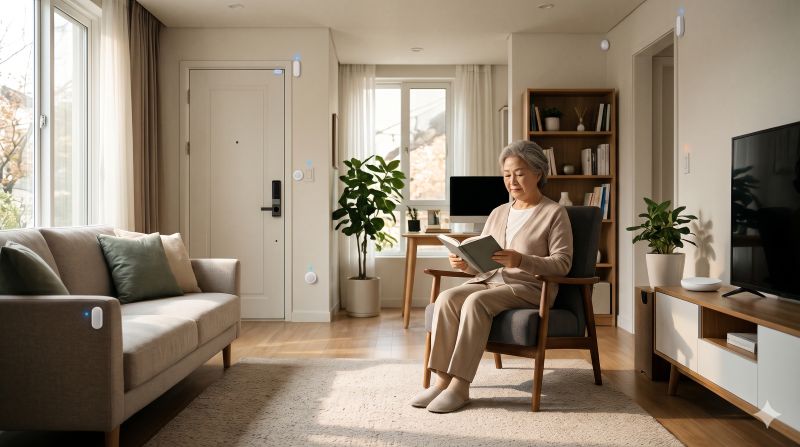
AI-Powered Ambient Monitoring Pipeline: The session transitioned into an operational showcase by Korean health-tech venture ZEROWEB, demonstrating its 'Carebell' platform. Leveraging non-contact IoT sensors and AI pattern recognition to track Activities of Daily Living (ADL) and detect falls in real time, the discussion established concrete parameters for pilot validations (PoC) across Comfamiliar’s regional hospitals and senior care facilities.
Moving forward, GDIN and Comfamiliar Risaralda plan to formalize their institutional synergy through a Memorandum of Understanding (MoU). This framework will establish a de-risked commercial corridor for technology transfer, enabling Korean healthcare innovators to scale their solutions into the Colombian market while advancing global healthcare equity.
|
|
|
🚀 60Hertz: The climate-tech and energy-IT innovator entered into a three-year strategic MoU with Germany’s Fraunhofer Institute for Energy Economics and Energy System Technology to co-develop AI-driven Virtual Power Plant and smart grid technologies. The bilateral research initiative focuses on the aggregation, predictive forecasting, and automated dispatch of distributed energy resources—spanning renewables, energy storage systems, and electric vehicles—alongside AI-orchestrated grid management architectures. Leveraging Fraunhofer’s operational research infrastructure, 60Hertz aims to establish localized reference pipelines to accelerate its expansion across Europe’s transitioning energy market. |
|
|
🚀 FuriosaAI: The AI semiconductor fabless enterprise executed a tripartite MoU with global semiconductor leader AMD and DPU innovator MangoBoost to build an enterprise-grade heterogeneous AI computing infrastructure cluster. By architecting a unified stack combining AMD’s enterprise CPUs and GPUs, FuriosaAI’s next-generation NPUs, and MangoBoost’s high-performance DPUs, the consortium aims to maximize computational throughput and thermal/power efficiency across dense AI workloads. The partners will deploy their initial reference cluster in Seoul in late Q1 2027, establishing an end-to-end commercial benchmark to capture the rapidly scaling global enterprise AI data center market. |
|
|
🚀 AITRICS: The medical AI company entered into two separate MoUs with the University of Hong Kong’s Medical Faculty (HKUMed CHART) and Gleneagles Hospital Hong Kong for the clinical validation and hospital deployment of its acute deterioration prediction platform, 'AITRICS-VC'. Building on its prior Hong Kong Medical Device Division (MDD) regulatory clearance and the establishment of its local subsidiary in May, these bilateral partnership establish on-site clinical validations to acquire real-world patient telemetry across intensive and general care environments. These validation pipelines serve as an institutional stepping stone to scale AITRICS-VC across Hong Kong's public hospital authority network and accelerate market entry into broader Southeast Asian and Pan-Asian healthcare systems. |
|
|
🚀 DEEPX: The edge AI semiconductor pioneer secured a three-year global mass-production agreement with AAEON, the industrial computing subsidiary of ASUS Group, to integrate its ultra-low-power NPUs into standard edge computing hardware. The partnership initiates commercial-scale co-production of standard M.2 and PCIe AI accelerator modules powered by DEEPX’s flagship 5nm NPU, the 'DX-M1'. Backed by verified global pre-orders across smart factory automation, autonomous robotics, and video management systems, the contract transitions the chipmaker from PoC validations into full-scale industrial commercialization across ASUS’s global supply chain.
|
|
|
ZEROWEB: Pioneering In-Home Senior Care via Contactless ADL Telemetry |
|
|
As global populations age rapidly, eldercare faces severe adherence and privacy barriers. Conventional camera surveillance is rejected by over 70% of seniors due to privacy concerns, while wearable devices see just a 7.1% sustained adoption rate due to the inconvenience of daily charging and wearing.
Senior-tech pioneer ZEROWEB resolves this friction with Carebell, a contactless home healthcare platform built on a strict "No Cameras, No Speakers, No Wearables" approach. By converting ambient Activities of Daily Living (ADL) data into predictive behavioral and medical intelligence, Carebell bridges community welfare with clinical home-based remote patient monitoring (h-RPM).
🛰️ Contactless ADL Sensing & AI Emotional Telecare
Carebell pairs non-intrusive ambient hardware with empathetic digital triage:
-
Zero-Burden Ambient Sensing: Discrete environmental, motion, and door sensors connected via built-in LTE Cat M1 track daily routines without requiring cameras, wearables, or manual pairing. Proprietary algorithms analyze indoor mobility patterns, circadian sleep-wake cycles, and appliance telemetry to quantify isolation risks and flag routine disruptions.
-
Acoustic Biomarkers via 'Carecall': In place of AI speakers, dedicated telecare counselors conduct weekly 5-minute check-ins to build trusted emotional rapport. An embedded NLP engine analyzes vocal telemetry—including speech velocity and breathing cadence—as digital vital signs to detect early indicators of depression and cognitive decline.
-
Targeted Triage & Zero-Death Operational Record: Carebell resolves 99.6% of flagged risk signals through tiered verification calls, mitigating emergency dispatch fatigue. Across extensive Korean municipal smart-city deployments, the infrastructure has maintained an unblemished record of zero unattended solitary deaths among managed users.
💡 Clinical-Grade h-RPM & Strategic Global Corridors
ZEROWEB is scaling its ambient architecture into clinical convalescence, global health systems, and disaster resilience:
-
Hospital-to-Home h-RPM Pipeline: In collaboration with tertiary medical centers including Pusan National University Hospital, Carebell monitors post-discharge recovery for lung cancer surgery, fracture rehabilitation, and renal failure dialysis cohorts. Data-fusion simulations demonstrate that pairing hospital records with ambient ADL telemetry detects critical deterioration risks up to 4 days earlier than isolated biometric indicators alone.
-
Institutional Validation in the UK and Japan: Carebell was officially selected for a 2026 clinical pilot across Liverpool care facilities in partnership with the University of Liverpool’s Civic Health Innovation Labs (CHIL) and the National Care Forum (NCF), aligned with the Horizon Europe framework. In Japan, backed by investment from PKSHA Capital and registered patents, the company is advancing local municipal and smart-care deployments.
-
Disaster Safety Integration with Silicon Valley's Vantiq: Partnering with Silicon Valley smart-city platform Vantiq and Etevers, ZEROWEB launched Carebell 2.0 in Washington, DC. The system pairs in-home activity detection with external location data to guide rapid evacuation and rescue for isolated seniors during floods, wildfires, and extreme weather emergencies.
By turning everyday routines into proactive health data, ZEROWEB delivers a scalable, privacy-first infrastructure that enables dignified aging in place. |
|
|
Decoding Korean Innovation |
|
|
Korea Secures Record $2B Foreign Investment to Power AI Infrastructure |
|
|
From November 4 to 6 in Seoul, South Korea’s Ministry of Trade, Industry and Energy (MOTIE) and KOTRA convened the 22nd Invest KOREA Summit (IKS 2026) under the banner "M.AX KOREA: Where Next Growth Begins". Bringing together over 2,000 global participants, the summit secured a record $2 billion in foreign direct investment (FDI) pledges. The milestone capital commitment accelerates South Korea’s transition into an international proving ground for sovereign AI compute, advanced semiconductor packaging, and clean industrial energy.
🌐 Record $2B FDI Targeted Across AI Compute & Regional Supply Chains
The summit converted cross-border dialogue into immediate capital allocations across strategic manufacturing corridors:
-
$2B for AI Compute & HBM Packaging: Seven global anchors pledged a record $2 billion, targeting hyperscale AI data centers (UK's Nscale) and critical High Bandwidth Memory (HBM) packaging supply chains. Commitments include advanced packaging lines from Amkor Technology (US), fabrication equipment from Tokyo Electron (Japan), packaging materials R&D by Henkel (Germany), and specialty gases from Air Liquide (France).
-
97% Directed to Regional Clean Energy: Directing 97% ($1.97 billion) of capital to non-capital industrial clusters, the investments bolster regional supply chains under the "5 Megacity & 3 Special Region" initiative. Singapore’s Gurin Energy and Norway’s Deep Wind Offshore pledged major capital for solar and offshore wind projects to supply dedicated carbon-free energy (CFE) to high-tech manufacturing corridors.
⚙️ Institutional Foreign R&D Hubs & Ecosystem Synergies
To build a sustainable co-innovation ecosystem, South Korea expanded collaborative infrastructure for foreign tech enterprises:
-
Designation of Three Foreign R&D Centers: MOTIE designated regional R&D centers for Edwards (UK, semiconductor vacuum technology), Valeo (France, autonomous mobility), and IBIDEN (Japan, semiconductor graphite). These centers gain streamlined residency provisions and prioritized access to joint national R&D programs.
-
Global VC Matchmaking & Data Center Hub: The concurrent Global VC Forum connected scale-ups with tier-one international investors, including ARCH Venture Partners and Playground Global. Simultaneously, KOTRA and the Korea Data Center Council (KDCC) executed an MoU to resolve regulatory and site hurdles for international AI data center operators.
This milestone capital commitment cements South Korea's role as a leading proving ground for enterprise AI and semiconductor manufacturing. For global tech scale-ups and institutional investors, the M.AX framework delivers a de-risked launchpad to co-develop and scale industrial AI solutions across integrated supply chains.
|
|
|
4F, Startup Campus Building #3, 20, Pangyo-ro 289Beon-gil, Bundang-gu, Seongnam-si, Gyeonggi-do Korea 13488
You are receiving this email because you have visited our site or asked us about regular newsletter.
|
|
|
|
|