Korean government launches new AI legal assistant GDIN to Execute Soongsil University's 2026 Global Acceleration Program |
|
|
GDIN has been selected as the executing agency for the "2026 Global Acceleration Program," a specialized initiative curated by the Soongsil University Campustown.
Designed to fortify the global commercialization capabilities of promising early-stage enterprises and expand their international business pipelines, the program will support four standout cohorts: NISOFT (generative AI music platform 'Music on the Block'), AI Castle (integrated AI education solutions), whybiz (smart farm IoT and automated hardware solutions), and Plynk Data (data-driven smart healthcare solution).
🌐 A Critical Imperative for Early-Stage Tech Growth
In today's interconnected market, targeting global expansion from the initial stages of launch is no longer an option, but a critical imperative for sustainable growth. To ensure these promising startups successfully navigate foreign markets, GDIN will provide a comprehensive support framework. This structured lifecycle includes global readiness diagnostics, localized IR pitch deck refinement, specialized consulting (covering legal, accounting, patent, and PR strategies), and targeted matchmaking with potential international corporate partners and investors.
|
|
|
🚀 FNC Technology: The nuclear safety engineering pioneer, in partnership with the Korea Atomic Energy Research Institute, has been selected as the preferred bidder to construct a Neutron Transmutation Doping (NTD) facility at the Jordan Research and Training Reactor. NTD is a sophisticated technique that irradiates high-purity silicon wafers with neutrons to transform silicon into phosphorus, serving as a critical bottleneck-breaking technology required to manufacture ultra-high-quality power semiconductors for electric vehicles and renewable energy grids.
|
|
|
🚀 DABIDA: The AI-driven edutech innovator has won the prestigious "2026 WIPO Global Awards" in the Creative Industries category, hosted by the World Intellectual Property Organization (WIPO). DABIDA was highly recognized for its proprietary AI handwriting recognition technology, which analyzes students' real-time handwriting and solving processes to deliver immediate, hyper-personalized academic feedback. |
|
|
🚀 Autonomous A2Z: The global autonomous driving leader showcased its Level 4 driverless shuttle 'ROii' alongside its advanced remote control driving technology at the 'NCS AI Impact 2026' in Singapore. Featuring a physical-AI-driven mobility architecture with no steering wheel or driver cabin, ROii is slated to deploy a localized pilot program for driverless shuttle services across Singapore’s smart transportation corridors.
|
|
|
🚀 MOIN: The cross-border money transfer fintech pioneer has successfully acquired a European Electronic Money Institution (EMI) license. Valid across all 30 member states of the European Economic Area (EEA) without requiring country-specific regulatory approvals, this regulatory milestone enables MOIN to instantly deploy comprehensive financial services across Europe. Furthermore, the license aligns with the EU’s newly implemented Markets in Crypto-Assets (MiCA) framework, paving the complex regulatory pathway for future stablecoin issuance and utility. |
|
|
Colosseum: Building the Next-Gen Global Supply Chain OS
|
|
|
The explosive growth of cross-border e-commerce has left global brands grappling with chronic supply chain inefficiencies. Traditional enterprises are heavily bottlenecked by fragmented logistics channels, high upfront CAPEX, and unstructured manual operations.
Colosseum is dismantling these friction points. By fusing an agile, asset-light warehouse network with its proprietary integrated SCM platform, COLO AI, Colosseum is redefining the standard for global digital supply chain operations.
🛰️ The Core Engine: Asset-Light Flexibility & COLO AI
-
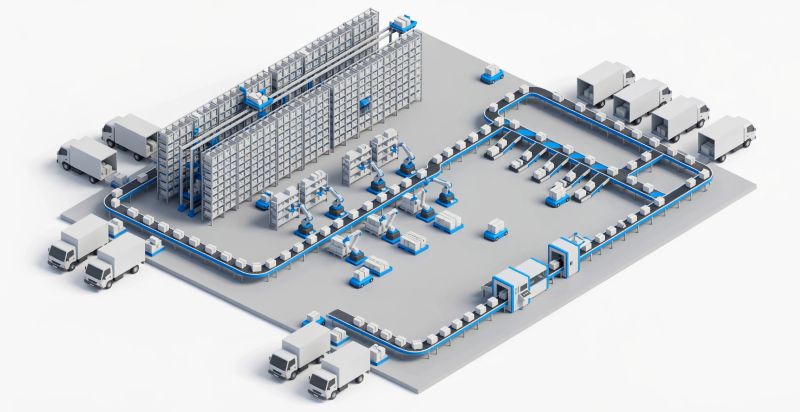
The SCM OS, COLO AI: A cloud-native, modular platform that seamlessly unifies OMS, WMS, and TMS. With real-time API integration across major global marketplaces like Amazon, it automatically orchestrates complex sales data into streamlined warehouse tasks.
-
Data-Driven Physical AI: Colosseum deploys advanced algorithms directly onto warehouse floors to optimize physical movement. The platform slashes travel times by 46% through picking path optimization, achieves 95% packaging material efficiency, and runs smart-routing to process orders 97% faster.
-
Strategic Global Footprint: Operating over 58 network centers spanning Los Angeles, Tokyo, and Seoul, Colosseum provides a seamless cross-border infrastructure connecting Asia-Pacific and North American markets.
🤖 Unifying SCM and Robotics: 'Colosseum Vault'
While logistics sites demand smart automation, procuring warehouse robotics has historically been a highly fragmented and costly process. Enterprises previously had to navigate disjointed, multi-vendor procedures—from spatial layout design to separate integration contracts—wasting immense time and capital.
To address this, Colosseum has officially launched Colosseum Vault, a comprehensive warehouse automation marketplace and comparison platform.
Colosseum Vault integrates the entire hardware and software automation lifecycle. From initial network-based ROI diagnostics and hardware sourcing to multi-vendor system integration (WMS/WCS/RCS) and nationwide maintenance, the platform connects demand-side enterprises with top-tier robotics manufacturers in one continuous workflow.
By bypassing heavy fixed CAPEX and infusing intelligent, operations-driven automation, Colosseum is successfully establishing itself as the definitive global operating system for modern supply chains.
|
|
|
Decoding Korean Innovation |
|
|
Korean Government Deploys 'AI Legal Secretary' for Public Services |
|
|
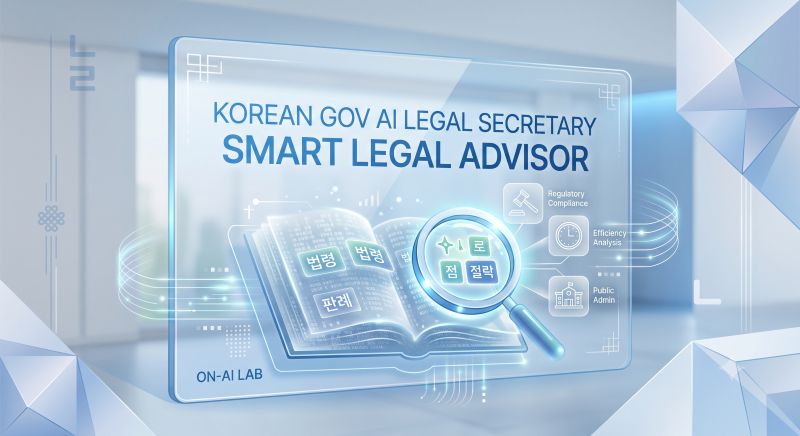
The South Korean government is aggressively digitizing its administrative infrastructure to deliver faster, highly reliable public services. In a landmark initiative, the government has officially launched the "AI Legal Secretary" service for all central and local public officials starting July 14, 2026.
This GovTech milestone drastically slashes the hours spent by public officials manually reviewing complex legal codes, directly accelerating overall administrative response times for citizens. Most notably, the tool represents a massive shift in public-sector agility: it was built directly by active public officials in just one month without dedicated external developers, utilizing the government's shared AI infrastructure.
📊 Technical Execution: RAG-Driven Architecture and Sovereign LLMs
To eliminate hallucination and ensure absolute legal accuracy, the system leverages South Korea's sovereign public-sector AI infrastructure:
- Sovereign Foundation Models: The system runs on a highly specialized, domestically trained sovereign AI foundation model, explicitly optimized on Korean language syntax, administrative contexts, and legal terminology.
- Massive Legal RAG: The AI Legal Secretary operates on a rich internal repository featuring 60,000 Supreme Court precedents alongside over 240,000 statutory laws and administrative regulations. The RAG engine forces the model to ground its answers strictly in this verified database to prevent hallucinations.
- Accelerated Local Government Datasets: Recognizing the immediate operational needs of local municipal offices, the government fast-tracked the system integration of 50,000 local ordinances from five major metropolitan areas—including Seoul, Incheon, Daejeon, Sejong, and Gyeonggi Province—deploying them months ahead of the initial roadmap.
⚙️ Democratic Tech Innovation: The 'On-AI Lab' Portal
Rather than confining advanced technology to a central ministry, the government has democratized its AI resources. All central and local municipal public officials can instantly access the AI Legal Secretary through the "On-AI Lab"—a secure, internal government network platform that allows officials to leverage the latest LLMs.
While the generated outputs serve as intermediate reference materials rather than definitive legal verdicts, the deployment of this tool marks a historic first step toward building a highly efficient, software-defined public administration. By continuously expanding specialized public datasets, South Korea continues to refine a scalable blueprint that transforms traditional public administration into an agile, AI-driven GovTech ecosystem.
|
|
|
4F, Startup Campus Building #3, 20, Pangyo-ro 289Beon-gil, Bundang-gu, Seongnam-si, Gyeonggi-do Korea 13488
You are receiving this email because you have visited our site or asked us about regular newsletter.
|
|
|
|
|