TelePIX:Payload-as-a-Service, Discover 10 climate solutions GDIN Partners with Mexico to Expand Open Innovation Networks |
|
|
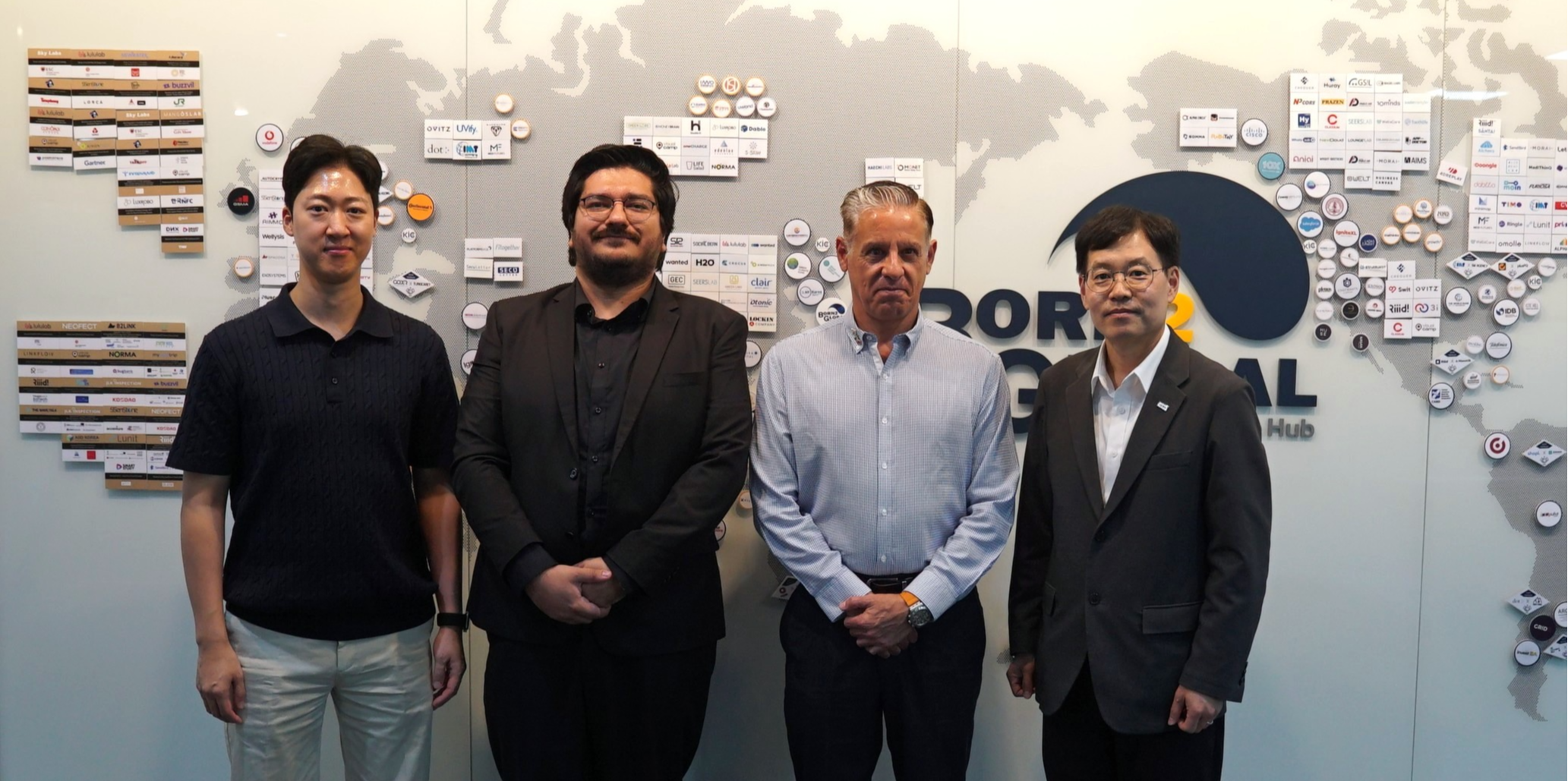
On July 2, GDIN welcomed a high-level executive visit from Mexico, hosting Dr. Enrique Rabell García, General Director of the Querétaro State Council of Science and Technology, alongside Dr. Marco Antonio Beltrán Navarro, Counselor for Science, Technology, and Educational Cooperation at the Embassy of Mexico in Korea.
The session focused on broadening cross-border open innovation ecosystems and establishing practical validation pipelines for innovative technology enterprises looking to enter the Latin American market.
During the meeting, Sokjin Chang, Managing Director of GDIN, showcased Korea's dynamic startup infrastructure alongside GDIN's high-velocity expansion models. The Mexican officials focused heavily on GDIN’s structured Global PoC Programs and its Joint Venture Facilitation Framework, both of which systematically match Korean tech innovators with localized public and private commercial operations.
🌐 Scaling Latin American Footprints & Proven Modalities
GDIN shared its rapidly expanding operational layout across Central and South America, highlighted by two landmark initiatives:
-
The Brazilian 'Korean Valley': A continuous innovation hub co-engineered with the State Government of Paraná, serving as a blueprint for institutional soft-landings.
-
Health on Cloud’s Telemedicine Deployment: Supported by the Inter-American Development Bank, GDIN portfolio company Health on Cloud secured a strategic MOU with the Monterrey Institute of Technology and Higher Education to deploy a high-impact localized medical JV.
📈 Joint Vision for Querétaro State Pilot Programs
Recognizing the strong alignment between GDIN’s proven regional traction and Mexico’s local ecosystem demands, both parties enthusiastically agreed to explore the co-architecture of a customized technology pilot program tailored directly to Mexico’s central industrial hub.
"Querétaro faces massive infrastructure and technological demands, particularly within the telemedicine and smart agriculture segments," emphasized Dr. García. "Drawing inspiration from successful co-development frameworks in Latin America, Querétaro is uniquely positioned to serve as a definitive launchpad and geographic corridor for bilateral technological commercialization in Mexico."
Building on this initial meeting, both parties plan to maintain close communication through subsequent working sessions to finalize actionable cooperation roadmaps.
|
|
|
🚀 Crescom: The musculoskeletal AI pioneer secured U.S. FDA 510(k) clearance for 'MediAI-OA,' its automated knee osteoarthritis analytical platform. The software processes X-ray modalities to deliver rapid, quantitative assessments of critical radiographic biomarkers. This regulatory milestone establishes a solid launchpad for Crescom’s upcoming commercial expansion into the U.S. healthcare market.
|
|
|
🚀 Vestellalab: The indoor navigation trailblazer behind 'Watchmile' has fortified its global IP moat by securing a landmark U.S. patent. The proprietary technology automatically extracts structural configurations from unstructured blueprints to synthesize AI-driven spatial data. By replacing manual data engineering, the framework drastically slashes the time and cost required for smart city spatial mapping. |
|
|
🚀 Sakak: The hyper-personalization AI innovator successfully closed a major Series A funding round. Sakak’s proprietary AI agent platform, 'HyPAA,' orchestrates tailor-made intelligence within on-premises and on-device environments. This architecture slashes operational costs by 75% and data transmission by 88% compared to traditional SaaS, capturing high-security demand in healthcare and insurance. |
|
|
🚀 Eucast: The Private 5G pioneer successfully deployed its 'Smart Safety Management Solution' at HJ Shipbuilding & Construction’s Yeongdo Shipyard, marking its expansion into large-scale commercial industrial sites. Built to penetrate extreme radio-frequency shielding from heavy steel structures, Eucast’s uplink-centric topology eliminates communication dead zones to enable real-time, ultra-low-latency industrial hazard prevention. |
|
|
TelePIX: Edge AI and Sub-Orbital Analytics Orchestrating the NewSpace Era |
|
|
The legacy 'downlink-first' approach forces satellites to beam terabytes of raw telemetry back to Earth, creating a severe bottleneck for time-sensitive AI inference and data analytics. Traditionally, this infrastructure required data to pass through terrestrial ground stations before any analytical workflows could begin, triggering processing delays and data attenuation that left defense nodes, financial desks, and disaster response teams stranded with outdated spatiotemporal intelligence.
South Korea’s TelePIX is systematically dismantling this spatial data gap. The enterprise has engineered a full-stack technical value chain that merges advanced satellite payload manufacturing with cloud-native edge computing and generative AI analytics.
🛰️ The Paradigm Shift: Real-Time Orbital Edge Computing with TetraPLEX
TelePIX has effectively bypassed external compute dependencies by developing TetraPLEX (TPX-100), the world’s first spaceborne AI processor and edge computing platform engineered for high-speed parallel processing in low-Earth orbit.
-
Terrestrial-Free Inference Infrastructure: Powered by an integrated NVIDIA embedded GPU, TetraPLEX executes deep learning models directly on the satellite payload. This approach eliminates the latency of ground station communication, preventing data loss and slashing actionable insight timelines.
-
Space-Proven Velocity Ledger: Deployed via a SpaceX Falcon 9 rocket to an orbit of 597 kilometers, TetraPLEX successfully demonstrated its automated image preprocessing and attitude control estimation algorithms in extreme cosmic environments. The system completed high-resolution satellite imagery preprocessing in just 11 seconds—accelerating throughput by 35 times compared to legacy FPGA boards.
📊 Hardened AI Vision: Translating Space Modalities into Financial Alpha
The enterprise’s computer vision architecture goes beyond academic prestige—such as having five papers accepted at the CVPR 2026 conference, with its GeoGS 3D reconstruction framework clinching the runner-up position for Best Paper. TelePIX is weaponizing this visual intelligence to solve high-friction industrial problems:
-
Few-Shot Environmental Agility: By utilizing optimized few-shot learning models, TelePIX's core software bypasses the limitations of legacy AI, allowing neural networks to adapt to dynamic atmospheric changes, seasonal transitions, and varying geographic profiles with minimal labeled datasets.
-
Automated 3D Topographic Synthesis: The platform automatically reconstructs highly precise 3D spatial environments from a limited sequence of sub-meter resolution satellite images, supplying instant structural assets for defense logistics and critical infrastructure monitoring.
-
Commodity Intelligence Monetization (MetalSCOPE): TelePIX developed MetalSCOPE, an advanced supply chain monitoring solution that automatically classifies scrap metal grades and calculates volumetric weights from space. By validating an average weight estimation error profile of just 13%, TelePIX has secured a lucrative contract with a major global financial information provider, transforming raw space telemetry into actionable financial assets.
💡 Payload-as-a-Service: Democratizing the Sub-Orbital Economy
To lower the high capital expenditure barriers of traditional satellite ownership, TelePIX is pioneering PaaS (Payload-as-a-Service). This subscription-based framework allows institutional clients to rent software space on TelePIX’s high-performance EO/IR constellation, replacing massive upfront CAPEX with predictable, data-backed operational expenditure models.
Backed by a powerful strategic platform partnership with global satellite giant Planet Labs—enabling steady access to raw telemetry from hundreds of active orbiters—and the commercial rollout of SatCHAT, the world’s first generative AI chatbot built specifically for natural language space intelligence queries, TelePIX is setting the global standard for next-generation NewSpace software vertical integration.
|
|
|
Decoding Korean Innovation |
|
|
South Korea and GGGI Deploy 10 Climate Technology Projects |
|
|
South Korea is systematically transitioning its advanced green technology from institutional laboratories into international environmental frameworks. The Ministry of Science and ICT (MSIT), in partnership with the Global Green Growth Institute (GGGI), has officially launched 10 targeted climate technology projects for 2026. This initiative connects South Korea’s public R&D assets with GGGI’s global networks to implement sustainable, market-ready solutions optimized for environmental challenges in developing economies.
📊 Structured Execution: Field Implementation & Pre-Feasibility Cohorts
The initiatives are engineered to address the specific infrastructure and environmental vulnerabilities of host nations. To maximize long-term operational success, the projects are split into two tailored execution pipelines:
-
Immediate Field Implementations (3 Projects): High-impact technical deployments launching in the second half of this year to clear local validation, operational milestones, and real-world testing.
-
Pre-Feasibility Studies (7 Projects): Strategic pre-planning initiatives designed to map out technological frameworks and build cooperative local infrastructure, serving as direct pipelines for expanded field validation in subsequent phases.
⚙️ Targeted Solutions: Data-Driven Optimization Across Three Continents
The inaugural field implementations demonstrate a shift toward highly precise, data-driven optimization, energy efficiency, and satellite intelligence:
-
Cambodia (AI-Driven Smart Grids): Upgrading and stabilizing aging national power grids utilizing advanced digital network solutions to reduce energy losses and secure regional electricity distribution.
-
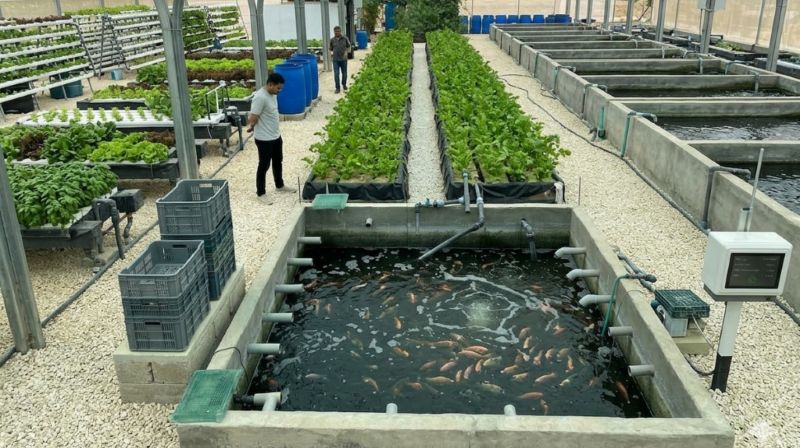
Jordan (AI-Powered Smart Agriculture): Implementing high-efficiency, automated aquaponics architectures to maximize agricultural productivity while minimizing water consumption in highly arid territories.
-
Paraguay (Spaceborne Disaster Prevention): Utilizing South Korean satellite technology and high-resolution Earth observation data to construct predictive, real-time early warning networks for climate risk and natural disasters.
Additionally, the pre-feasibility track introduces sophisticated technical frameworks to optimize energy efficiency. These include an AI-powered carbon Measurement, Reporting, and Verification (AI-MRV) project to upgrade municipal heating facilities in Mongolia, alongside AI hardware accelerator deployments to significantly lower the carbon and energy footprints of hyper-scale data centers in the Philippines.
By establishing these practical on-site reference cases with global agencies and private sector investors, South Korea continues to strengthen its role as a key collaborative partner driving real-world climate technology commercialization.
|
|
|
4F, Startup Campus Building #3, 20, Pangyo-ro 289Beon-gil, Bundang-gu, Seongnam-si, Gyeonggi-do Korea 13488
You are receiving this email because you have visited our site or asked us about regular newsletter.
|
|
|
|
|