Highlights from K-Space 2026, new JVs, and Willog’s AI K-Space Forum: Connecting Korea to the New Space Economy |
|
|
As the global space industry accelerates into the New Space era, one thing is becoming increasingly clear: success is no longer defined by technology alone, but by how effectively ecosystems connect.
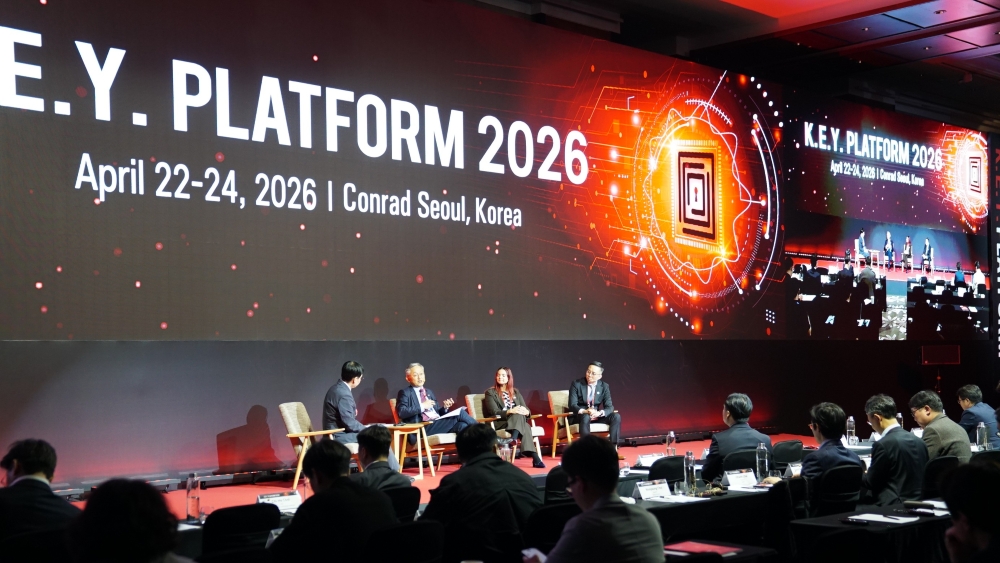
On April 24, GDIN and Money Today co-hosted the inaugural “K-Space Forum: Opportunities and Challenges in the New Space Era,” as part of K.E.Y. PLATFORM 2026 in Seoul.
The event brought together 200+ participants—including over 100 VCs—alongside leaders from industry, academia, and the military, marking a strong debut for Korea’s emerging space-tech platform.
🚀 Korean Space Startups in Focus
Three rising startups showcased their technologies:
- Cosmobee – High-efficiency Hall-effect thrusters enabling agile satellite movement, a technology used in systems like Starlink
- Flexell Space – Perovskite/CIGS tandem solar cells achieving 28–30% efficiency while reducing costs by 60%+
- Leospace – Advancing satellite imaging and laser communication, led by a veteran optical expert
💡 From Technology to Global Partnerships
In the panel “K-NewSpace Startups: Now is the Time to Connect,” GDIN CEO Jongkap Kim, ESA BIC Denmark, and ICEYE Korea discussed how startups can expand globally.
The key takeaway: success in global markets depends not just on access, but on trusted partnerships.
GDIN is actively supporting this through its PoC and JV programs, connecting 30–40 Korean startups each year with global partners to reduce risk and accelerate market entry.
🌍 Korea’s Growing Role
Panelists highlighted Korea’s fast, high-quality manufacturing as a major advantage in the global space industry—especially when navigating complex international regulations.
They also emphasized that opportunities extend beyond traditional space sectors. From telecom to advanced materials, startups can find high-impact opportunities by targeting underserved “gaps” in the value chain.
The first K-Space Forum signaled more than a successful event. It marked the beginning of a platform connecting Korean innovation to the global space ecosystem.
|
|
|
Crossing Borders Through Joint Ventures: 4 Pioneers Selected for JV Programm |
|
|
For innovation-driven startups, finding a local partner who understands the market as their own is the ultimate catalyst for success. GDIN’s Global JV (Joint Venture) Establishment Support Program has officially selected its first cohort of four trailblazing companies. Since 2021, this program has successfully facilitated the creation of 49 global JVs, proving that equity-based partnerships are the most resilient bridge to international markets.
🚀 Meet the Pioneers:
-
Uproot Company: Partnering with a Vietnamese firm to launch 'BitSaving,' an AI/Blockchain-powered digital asset investment platform.
-
Crosshub: Building a Southeast Asian fintech platform integrating identity verification and payment solutions for tourism.
-
Changsoft I&I: Expanding in Japan with 'BuilderHub-R,' an automated structural verification solution co-developed with Japanese partners.
-
Letitu: Scaling AI EdTech solutions across Southeast Asia, using its Malaysian JV as a strategic regional hub.
"In highly regulated sectors, a JV with a partner who understands local nuances is the key to market stabilization,"
- Jangwoo Lee, CEO of Uproot Company.
GDIN will continue selecting promising startups monthly through September to foster more "global-local" success stories.
|
|
|
Strengthening Korea-China Tech Synergy: Weihai Delegation Visits GDIN |
|
|
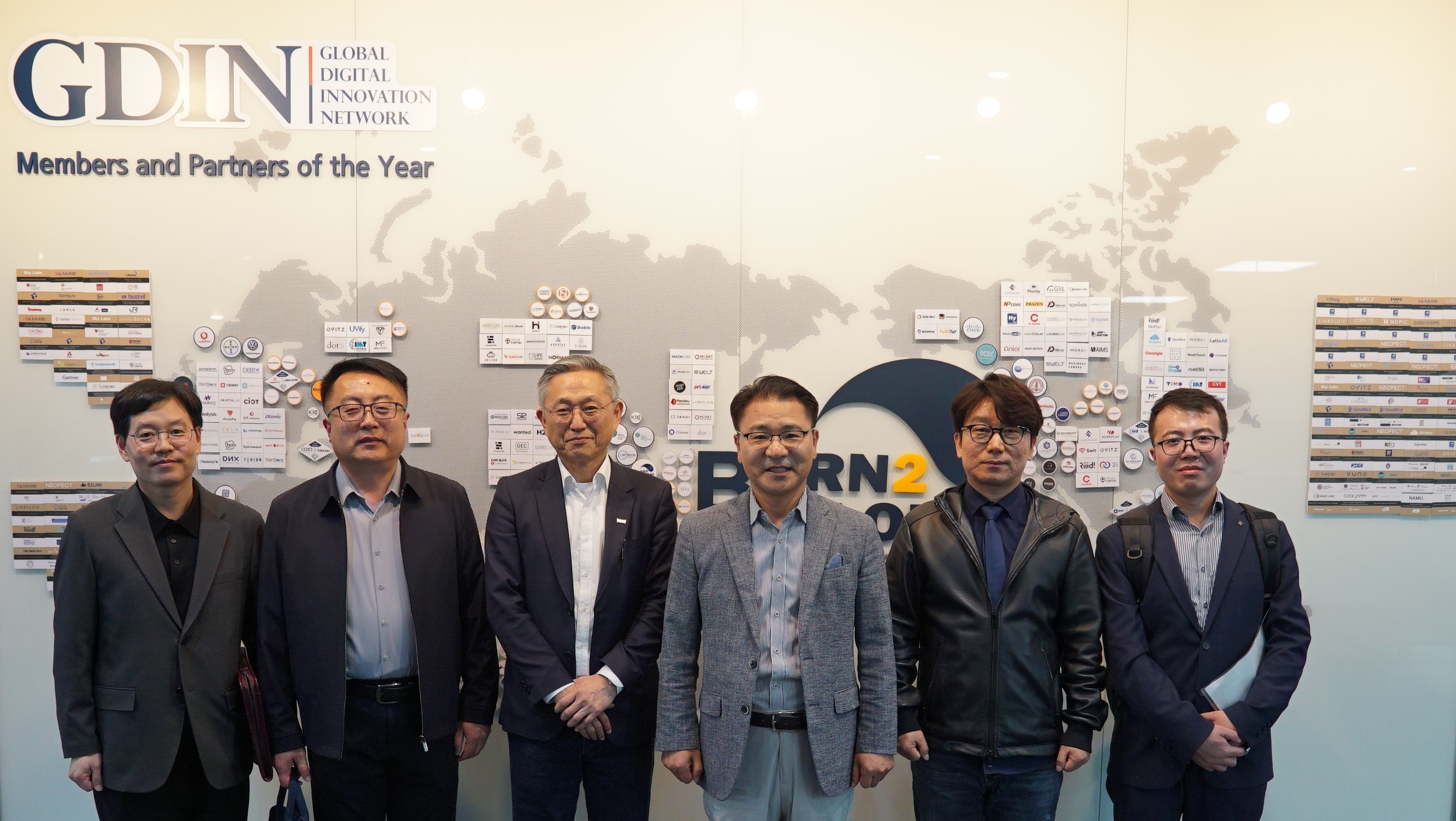
On April 22, GDIN hosted the Weihai Science and Technology Service Association from Shandong Province, China, to explore a new model for multilateral cooperation.
CEO Jongkap Kim highlighted that connecting technologically complementary companies from both countries could significantly boost global competitiveness. The two sides also agreed to continue discussions on joint initiatives tied to the upcoming Korea–China Innovation Competition in November, aiming to build a practical pathway for startups to expand across borders. |
|
|
🚀 LabnPeople: Secured an exclusive export contract with Japan’s scalp care leader REVE 21. Their magnesium-based microneedle technology is set to disrupt the Japanese wellness market.
🚀 Zkrypto: Successfully raised investment from S-Ventures. The firm was highly rated for its Zero-Knowledge Proof (ZKP) based infrastructure, essential for trust in digital asset ecosystems.
🚀 Pablo Air: Signed a supply contract with Canada’s ATC (Arctic Test Center) for their 'S10s' swarm suicide drones. The technology will be validated in a PoC attended by NATO and North American defense officials.
🚀 Tilda: Received requests exceeding KRW 20 billion from five Japanese trading houses for its AI Energy Management System, 'ArgMax Power.' The solution can reduce electricity costs by up to 30% for industrial ESS users.
|
|
|
From Reactive to Predicitve: “Logistics Foresight” |
|
|
Supply chain data has long remained a “black box” in global commerce: fragmented, opaque, and reactive. The cost of this uncertainty has been immense. Now, the market is shifting. Silicon Valley-based Loop’s $95 million Series C funding in April 2026 signals a clear transition: investors are no longer backing simple tracking tools, but platforms capable of delivering predictive logistics intelligence.
🌎 Market Shift: From Information to Intelligence
The core challenge is no longer data scarcity, but data fragmentation. Enterprises are moving beyond diagnosis (“What went wrong?”) toward prescription (“How can we prevent it?”). This shift is driving demand for an intelligence layer that can transform unstructured data into actionable, decision-grade insights.
🇰🇷 Korea’s Approach: Willog’s “Physical AI”
While many global players focus on digitizing documents, Willog addresses the problem at its source—the physical shipment itself.
-
Direct Data Capture: Using proprietary IoT sensors, Willog collects real-time, item-level data on temperature, humidity, shock, and location.
-
Predictive Intelligence: Its “Willog Intelligence” platform converts raw field data into predictive insights, enabling early risk detection and precise root cause analysis.
-
Data Monetization: By extending into logistics insurance—automating claims and settlements based on verified data—Willog is redefining logistics data as a financial asset.
As the market pivots toward predictive capability, the value lies in data integrity.
By bridging physical cargo and digital intelligence, Willog delivers the reliability required for true logistics foresight—positioning itself at the forefront of a market willing to pay a premium for certainty.
|
|
|
Decoding Korean Innovation |
|
|
Fueling the Future: Korea Bets Over $100B on 'Mega Projects' |
|
|
Korea is fundamentally restructuring its investment landscape. The National Growth Fund (NGF) has officially entered its second phase, moving beyond simple funding to focus on large-scale infrastructure and "Sovereign AI."
🚀 The Rise of "Mega Projects"
The government has identified six strategic sectors to bridge the "funding gap" where private capital remains cautious:
-
Sovereign AI: Securing domestic AI sovereignty through massive infrastructure, including a ₩400 billion boost for the Naver Sejong Data Center.
-
Next-Gen Bio & OLED: Directing capital into advanced R&D and manufacturing facilities.
-
Regional Innovation: Developing the Saemangeum Advanced Belt into a hub for robotics and hydrogen.
👩👧👧 Democratizing Investment: The Public Participation Fund
In a unique move to share national growth with its citizens, the government is launching a Public Participation Fund in May 2026. This allows individual investors to gain exposure to high-tech private equity with significant tax benefits (up to 40% income deduction).
💸 Incentivizing Boldness
To encourage private banks to invest in deep-tech, the Financial Services Commission (FSC) has slashed the risk weighting for these investments from 49% to as low as 16%.
Korea is building a new investment governance. By lowering risks for institutions and providing tax breaks for the public, Korea is ensuring that the entire nation has a stake in the success of its most innovative startups. |
|
|
Was this newsletter forwarded to you? Don't miss out on the next pulse of Korean innovation. Sign up here to get your own copy every week. |
|
|
4F, Startup Campus Building #3, 20, Pangyo-ro 289, Bundang, Seongnam, Korea 13488
You are receiving this email because you have visited our site or asked us about regular newsletter.
|
|
|
|
|