2M AI power-users, New Space race, and LATAM water-tech Listening Before Building: Korean Innovators Tackle Latin America's Water Challenges |
|
|
The Aqua Connect initiative—designed to address critical water infrastructure challenges across Latin America—has officially moved into its next phase.
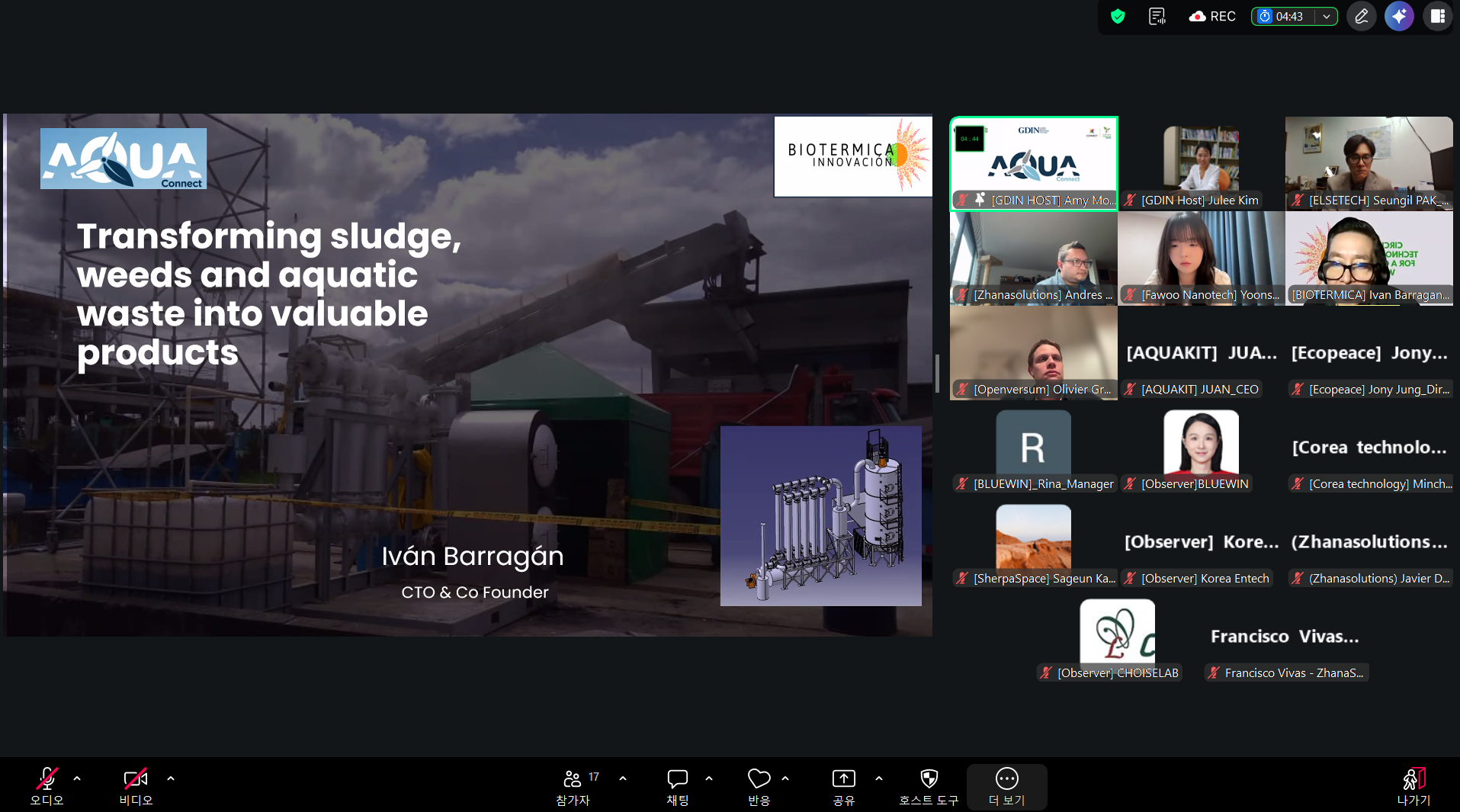
Following an oversubscribed application process on both sides, selected Korean and Latin American companies are now actively exploring partnerships through cross-pitching sessions, identifying synergies between proven technologies and real-world demand.
At the same time, GDIN is ensuring that innovation starts from the right place: a precise understanding of on-the-ground challenges.
🚀 Demand Speaks First: Reverse Pitching
A core pillar of Aqua Connect is the Reverse Pitching process.
Unlike traditional formats where solution providers present first, this stage is led by demand-side stakeholders—organizations that define the problems before solutions are proposed.
Leading institutions including Veolia, EPMAPS (Ecuador’s public water utility), and Aguas Regionales EPM (Colombia) shared detailed insights into operational bottlenecks and infrastructure gaps across their regions.
Their message was clear: the challenge is not a lack of technology, but a lack of context-fit, scalable solutions.
🌎 Defining the Real Problems
Across all three organizations, two priorities consistently emerged:
Key challenges include:
-
Non-revenue water and leak detection
-
Sludge treatment and resource reuse
-
Limited infrastructure in underserved and rural areas
-
Transition from reactive to predictive system management
These are not isolated technical issues—they are systemic challenges that require integrated, field-ready solutions.
With clearer problem definitions now on the table, participating companies are entering the next phase of cross-pitching with sharper focus.
The question is no longer “What technology do we have?”
but “How precisely can we solve the problem?”
|
|
|
New Space Demands Global Play: GDIN Joins K-Space Forum |
|
|
Space is the ultimate borderless industry—and in this arena, competitiveness is no longer defined by technology alone, but by the ability to connect globally.
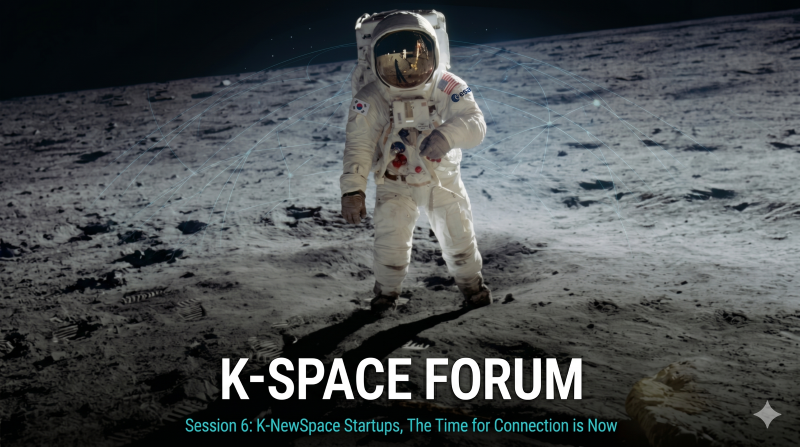
On April 24, GDIN will participate in the Global Session of the K-Space Forum, a special program within K.E.Y. Platform 2026, hosted by MoneyToday at Conrad Seoul.
The forum brings together leaders across technology, investment, research, and policy to examine the evolving New Space economy from multiple angles.
During the Global Session, GDIN will present actionable strategies for Korean space-tech startups seeking international expansion.
The session will be moderated by managing direcotor Sokjin Chang, with panel participation from:
Together, the panel will explore how Korean startups can engage with the European space ecosystem and identify practical pathways for cross-border collaboration.
GDIN’s participation in the K-Space Forum reflects its continued commitment to bridging Korean innovation with global markets—ensuring that promising space-tech companies are positioned not just to compete, but to scale internationally.
|
|
|
🚀 Codepresso: Ranked among the top winners at the Supernova Challenge at GITEX AI Asia 2026, with its AI capability assessment-based enterprise transformation model gaining global recognition.
🚀 MetaDx: Selected as the lead for Korea’s 2026 Companion Animal Intractable Disease R&D Program (KRW 5B), advancing AI-powered precision diagnostics in pet healthcare.
🚀 DEEPX: Completed mass production validation with Hyundai Motor Group’s Robotics Lab. Its AI chips will power DAL-e and MoBED, with rollout starting later this year.
🚀 Madup: Filed for a KOSDAQ IPO. Its AI agent LEVER Xpert automates 90% of marketing data workflows, shifting execution toward AI-driven analysis and strategy.
🚀 StradVision: Expanding into India with SVNet, delivering real-time vision AI for ADAS. Now deployed in over 5M vehicles globally.
|
|
|
From Attention to Retention: The Gamification of Learning |
|
|
As short-form content reshapes how younger generations consume information, traditional education models are facing a structural challenge: declining attention spans and engagement.
A new wave of edtech startups is responding not by resisting this shift—but by embracing it.
Recently, U.S.-based AI learning platform Gizmo raised $22 million in Series A funding, rapidly scaling to over 13 million users. Its core approach is simple but powerful: turn studying into a game.
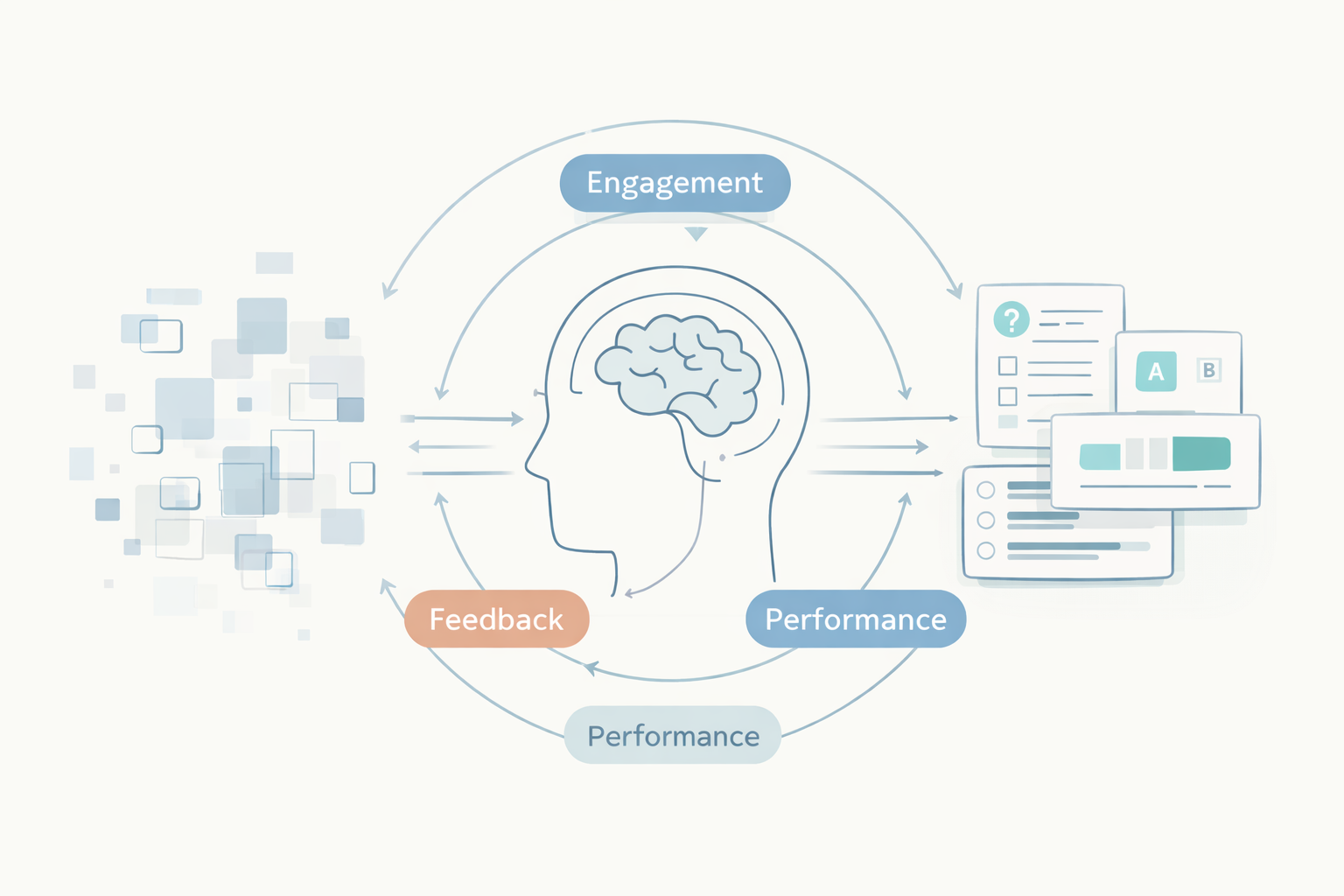
Instead of static content, Gizmo transforms students’ notes into interactive quizzes and flashcards using AI—layered with game mechanics such as streaks, leaderboards, and reward systems. The result is a behavioral loop where engagement drives repetition, and repetition drives learning.
This signals a broader shift: learning is no longer just about content delivery, but about experience design.
🇰🇷 Mathpresso – Engineering Measurable Learning Outcomes
Korea’s Mathpresso is taking this evolution a step further—combining engagement with tangible academic performance.
Its flagship app QANDA allows users to instantly solve problems by simply taking a photo, now serving tens of millions of users across more than 50 countries.
Building on this, Mathpresso is integrating LLM-based AI tutors to deliver highly personalized, real-time feedback.
Another product, Cramify, converts study materials such as PDFs and lecture notes into structured summaries and customized test questions—effectively acting as an “AI tutor” for intensive exam preparation.
📈 Learning as a System, Not Content
The competitive frontier in edtech is shifting:
-
From content quality → engagement design
-
From passive consumption → interactive loops
-
From generalized teaching → personalized feedback systems
In this new paradigm, the winners won’t just deliver information—they will design systems that make learning stick.
|
|
|
Decoding Korean Innovation |
|
|
AI for All: Turning a Nation into AI Power-Users |
|
|
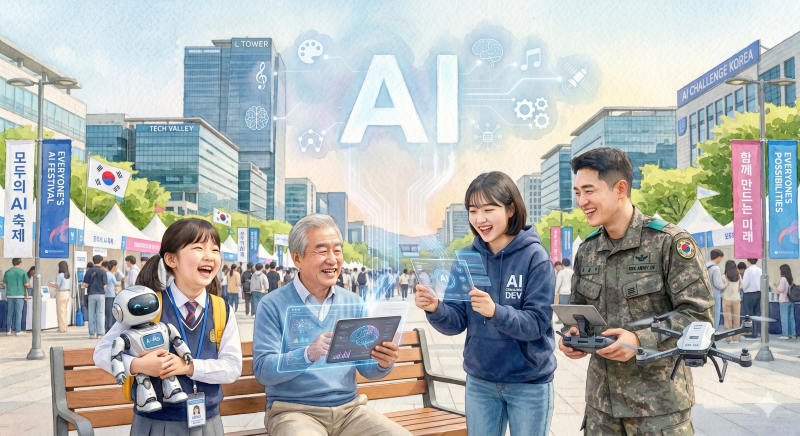
Following our look at how AI is bridging the digital divide for seniors, Korea is now moving from AI awareness to AI action. The Ministry of Science and ICT recently launched the "AI Challenge for All," a nationwide festival designed to prove that AI is no longer a niche tool for engineers, but a basic life skill—much like reading or basic math.
🎊 A Festival on a Massive Scale
👯♂️ A Track for Everyone
- The competition is smartly segmented into four tiers:
-
General Public: AI quizzes and error-spotting to build familiarity.
-
Future Talent (K-12): AI-driven storytelling and robotics to spark early interest.
-
Advanced Researchers: Specialized tracks for defense, education, and university-level tech development.
-
Inclusive Innovation: Targeted support for seniors, people with disabilities, and career-interrupted women to ensure no one is left behind in the AI era.
💸 From Prompts to Profits:
- This isn't just for fun. High-performers will be linked directly to the "Startup for All" initiative, bridging the gap between a successful "challenge" entry and a real-world business.
By gamifying AI literacy for 2 million people, Korea is building the world's most AI-literate workforce from the ground up.
|
|
|
Was this newsletter forwarded to you? Don't miss out on the next pulse of Korean innovation. Sign up here to get your own copy every week. |
|
|
4F, Startup Campus Building #3, 20, Pangyo-ro 289, Bundang, Seongnam, Korea 13488
You are receiving this email because you have visited our site or asked us about regular newsletter.
|
|
|
|
|