Korea’s Agricultural AX Roadmap & The Evolution of Tire The Next Frontier for Korean Deep-Tech in North America |
|
|
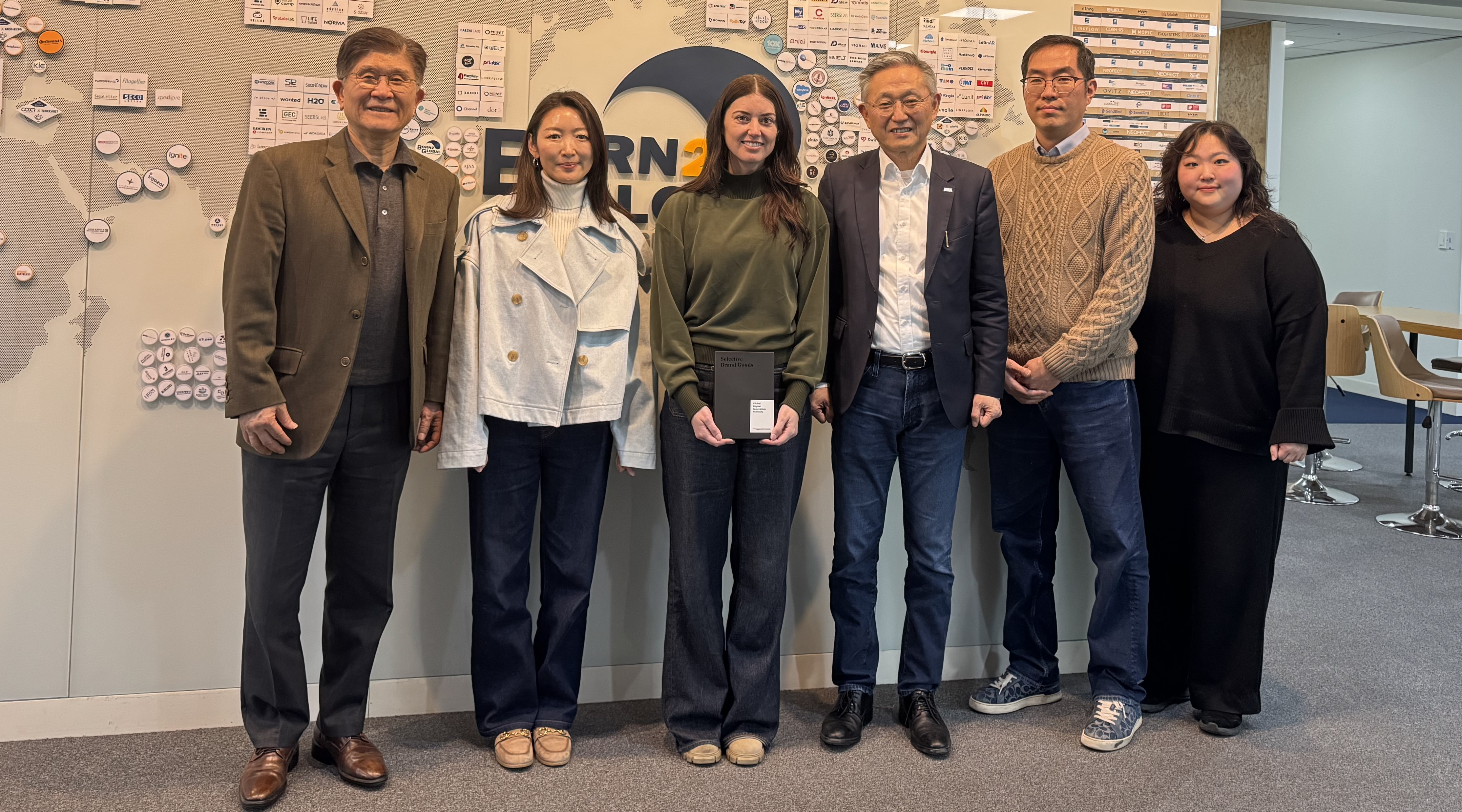
On March 12, GDIN hosted a delegation from Utah, marking a significant step in strengthening the innovation corridor between Korea and the Western United States.
Led by Angela Smith, COO of the Nucleus Institute, alongside representatives from the Utah Governor’s Office of Economic Opportunity (GOEO), the visit highlighted Utah’s rapid emergence as a premier global hub for high-growth sectors such as Life Sciences, Defense, Aerospace, and Cybersecurity.
During the meeting, the delegation articulated a clear vision for integrating Korean technological excellence into Utah’s thriving deep-tech ecosystem.
For Korean innovators looking to incorporate or expand within the U.S., the partnership promises a sophisticated support structure that includes direct connections to localized funding, specialized mentorship from industry veterans, and collaborative R&D opportunities with Utah’s leading research universities.
COO Angela Smith underscored Utah’s commitment to being more than just a gateway, but a long-term strategic partner, ensuring that Korean startups have the resources and institutional support needed to lead the North American market.
|
|
|
Bridging Markets through Strategic Alliances: The 2026 JV Support Program |
|
|
GDIN is officially inviting innovative startups to join the '2026 D.N.A. Joint Venture Support Program,' a flagship initiative designed to replace the traditional "solo" export model with a more robust Joint Venture (JV) strategy.
Recognizing that local expertise is the ultimate catalyst for global success, this program focuses on helping AI, Data, and Network (D.N.A.) companies establish stable market foundations through partnerships with local entities.
To lower the barriers of capital and trust, GDIN provides a comprehensive support package of up to KRW 35 million per company. This funding is strategically allocated to cover critical soft-landing expenses, including 50% of labor costs and 30% of local office rent, alongside international travel expenses.
Beyond financial aid, participating firms gain access to a "professional shield" of legal, accounting, and patent experts to manage cross-border risks, as well as exclusive networking opportunities with global VCs and industry giants.
Applications are currently being accepted on a rolling basis through September 2026, offering a unique opportunity for unlisted SMEs to secure a permanent foothold in the global digital economy.
|
|
|
- GSIL: Smart safety leader GSIL is accelerating its global footprint through a strategic MOU with U.S.-based NPU specialist Blaize. The partners will co-develop next-generation safety technologies powered by "Physical AI," integrating advanced computing with industrial safety protocols.
- XYZ: Robotics pioneer XYZ has successfully secured KRW 13 billion in Series B funding. Following a stellar year with over KRW 6 billion in revenue—driven by the success of its robotic barista, "Barisbrew"—the company recently unveiled its advanced "Barisbrew 4.0" model to further dominate the automated F&B market.
- Wellscare: Healthcare innovator Wellscare is expanding into Southeast Asia via a strategic partnership with Thailand’s Solnano Med. The agreement includes a supply contract for personal pain management devices and a collaborative framework for the development and licensing of hospital-grade medical hardware in the Thai market.
- Leesol: Mental healthcare specialist Leesol has closed a KRW 3 billion Series A2 bridge investment. The funding will fuel the growth of "Sleepisol," its proprietary wearable sleep management device that utilizes unique brainwave synchronization technology to improve sleep quality.
- DeepX: AI semiconductor powerhouse DeepX has initiated a PoC with Japanese giant Renesas. By integrating DeepX's 5nm "DX-M1" NPU with Renesas processors, the collaboration aims to deliver high-performance vision AI solutions tailored for the evolving smart factory industry.
|
|
|
Tires with a Brain: The Future of Intelligent Mobility |
|
|
As global fleets transition toward autonomous and connected operations, the tire is being redefined as a critical "intelligence node".
U.S.-based Revvo Technologies has emerged as a prominent player in this space, having recently secured approximately $23 million in funding to advance its AI-driven fleet management platform. Revvo’s technology excels at transforming raw tire data into actionable business intelligence, using machine learning to predict potential tire failures before they occur.
In parallel, Korean innovator BANF is transforming the tire into a proactive safety device that acts as a vehicle's "digital sense of touch". While traditional sensors are limited to basic pressure and temperature checks, BANF’s system provides a comprehensive "digital health profile" by detecting critical safety issues that are typically invisible until an accident occurs. Its solution identifies dangerous lug nut loosening to prevent wheel separation, monitors tread wear to extend tire life, and even evaluates road surface conditions like black ice or potholes.
Notably, BANF’s "battery-free" architecture, utilizing a Smart Profiler that transmits power wirelessly via magnetic resonance, eliminates the maintenance hurdles and environmental impact of traditional batteries while allowing for continuous, high-speed data collection.
|
|
|
Decoding Korean Innovation |
|
|
Harvesting AI: Korea's New "Agricultural AX" Roadmap |
|
|
The Korean government has officially designated the "Agricultural AI Great Transformation (AX) Strategy" as a national agenda, marking 2026 as the launchpad for a total digital overhaul of the rural ecosystem. This roadmap shifts focus from simple production automation to an integrated AI ecosystem covering the entire value chain, including distribution, livestock grading, and rural welfare.
-
Precision in Distribution: A standout opportunity for tech firms lies in the livestock sector, where the government aims to surge the AI-based grading rate for pork and beef to 70% by 2030.
-
Autonomous "NEXT Farms": In collaboration with the MSIT, the "NEXT Farm" project will leverage Physical AI and drones for autonomous farming, supported by a dedicated agricultural satellite launching in late 2026.
-
Startup Ecosystem: To fuel this growth, the government intends to nurture 3,000 agri-food startups by 2030 by establishing a "Data Value Evaluation System" and specialized innovation funds.
|
|
|
Was this newsletter forwarded to you? Don't miss out on the next pulse of Korean innovation. Sign up here to get your own copy every week. |
|
|
4F, Startup Campus Building #3, 20, Pangyo-ro 289, Bundang, Seongnam, Korea 13488
You are receiving this email because you have visited our site or asked us about regular newsletter.
|
|
|
|
|