AIVIS's Precision Oncology & Korea's Defense AX Center GDIN Operates Korean Tech Pavilion at CEATEC 2026 in Japan |
|
|
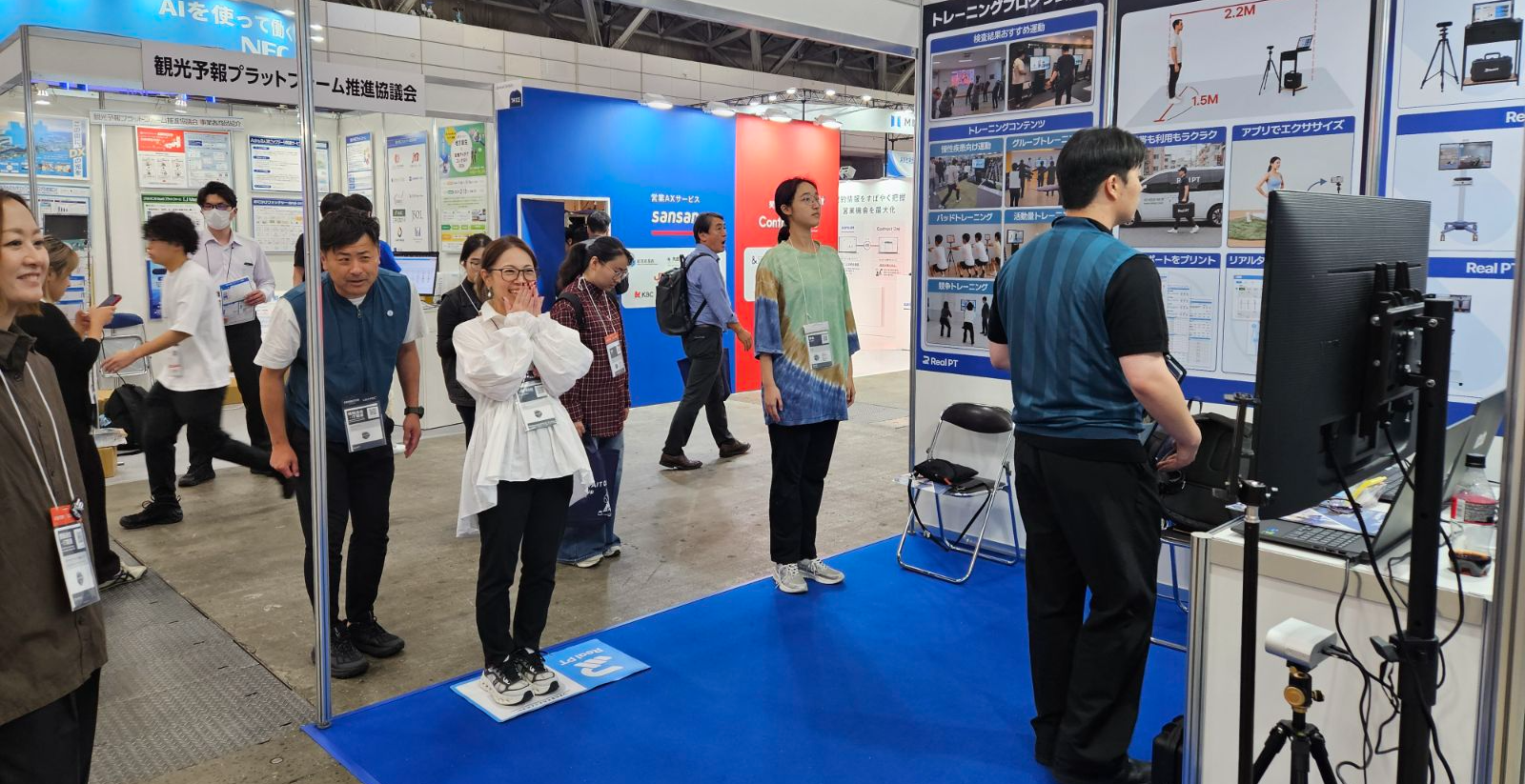
From October 13 to 16, GDIN is hosting the GDIN Pavilion at CEATEC 2026, held at Makuhari Messe in Chiba, Japan. Marking its largest scale to date with 821 exhibiting enterprises and institutions—including 194 international participants and 246 research hubs—the exhibition serves as a key platform for cross-border B2B collaboration. Within this collective exhibition space, GDIN is featuring eight Korean technology ventures spanning Agentic AI, FinTech, LegalTech, and digital healthcare to facilitate targeted market access and enterprise partnerships.
🤝 Strategic Focus on Commercial Validation & Japanese Enterprise Integration
Moving beyond standard product displays, GDIN structured the mission around actionable commercial milestones, focusing on enterprise Proof-of-Concept (PoC) discussions, local distribution channels, and strategic alliances with Japanese corporate partners and institutional investors.
📋 Participating Ventures & Enterprise Solutions
The pavilion convenes eight early- and growth-stage companies deploying specialized AI and enterprise SaaS solutions:
-
DeepSearch: AI-driven financial data platform delivering automated corporate intelligence and analytics for institutional decision-making.
-
IPIN LABS: Anchor-free indoor positioning technology providing real-time asset and personnel tracking with 1–5m precision without requiring dedicated hardware installations.
-
Sendbird: Multi-channel AI concierge solution ('delight.ai') designed to automate enterprise customer support and conversational workflows.
-
Pion Corporation: AI marketing automation infrastructure ('VCAT AI') streamlining creative asset production and multi-platform digital ad execution.
-
Korea Body Information: Musculoskeletal diagnostic platform ('Real PT Portable') analyzing posture and joint mobility within 40 seconds to generate data-driven exercise regimens.
-
NeuroFusion: Agentic AI-powered investment research engine built to automate enterprise-grade asset valuation and predictive modeling.
-
Buptle: Integrated B2B legaltech SaaS ('B-LAW') centralizing corporate contract lifecycle management, automated legal review, and compliance workflows.
-
AM Management: Non-custodial API architecture ('AM NAVI') providing automated digital asset quant management and execution infrastructure.
Through structured on-site engagements, the initiative aims to establish sustained commercial pipelines connecting Korean software and deep-tech ventures with the Japanese industrial ecosystem. |
|
|
GDIN Kicks Off AquaConnect Water-Tech Pilots in Latin America |
|
|
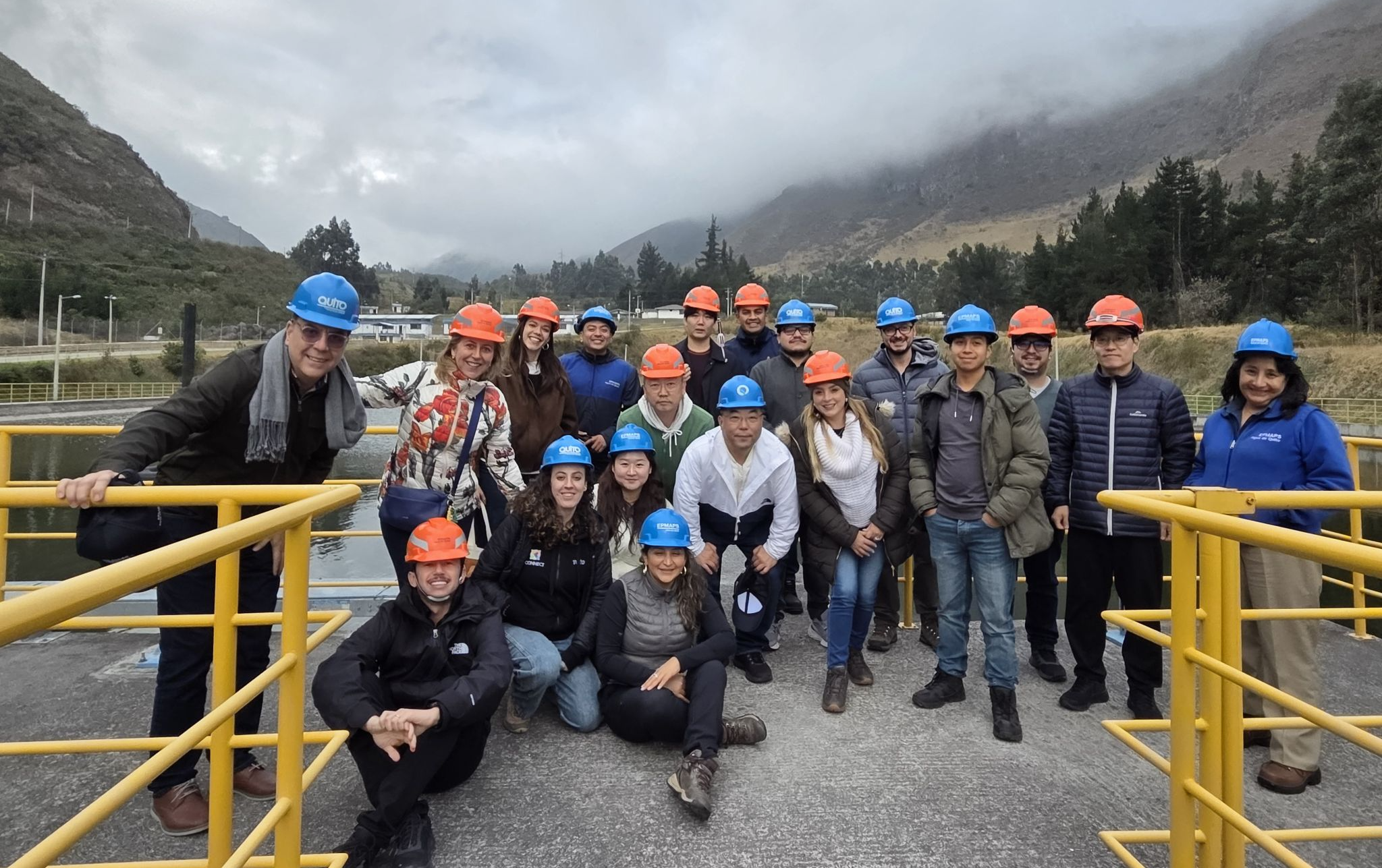
On October 5, GDIN co-hosted the 'AquaConnect Regional Exchange Program' in Quito, Ecuador, in strategic partnership with IDB Lab, regional innovation partner Connect, and EPMAPS (Quito Water Authority). This milestone convening brought Korean water-tech innovators and Latin American partners together for their first in-person exchange following seven months of project coordination, evaluating operational challenges and shaping cross-border implementation plans.
💧 On-Site Infrastructure Visits & Practical Feasibility Assessment
To align innovative solutions with regional environmental conditions, the delegation conducted on-site field visits across critical utility assets, including the La Mica Reservoir, the Antisana water-source conservation area, the El Carmen Hydroelectric Plant, and the El Troje Drinking Water Treatment Plant. These initial walk-throughs enabled participating teams to observe real-world operating environments firsthand and identify practical requirements for adapting and deploying solutions alongside local utility operators.
🤝 Institutional Frameworks & Bilateral Enterprise Partnerships
The exchange established structured operational foundations through key memorandums of understanding (MoUs):
-
Institutional Cooperation: GDIN and EPMAPS executed a strategic framework encompassing smart water management, advanced water treatment, and the co-development of future pilot initiatives.
-
Enterprise-Level Alliances: Formalizing regional collaboration, Korean tech innovators signed MoUs with local counterparts. ToIcoS (smart acoustic IoT leak detection) partnered with Venezuela's LiquidH2O, while Stellarvision (satellite data and AI-driven water analytics) aligned with Ecuador’s Soinntech to co-develop regionally tailored operational workflows.
📋 Activating 5 Cross-Border Enterprise Pilot Projects
Following the exchange, the AquaConnect consortium officially activated five cross-border pilot partnerships deployed across leading Latin American water service providers:
-
ToIcoS × LiquidH2O: Partnering with EPMAPS (Quito, Ecuador) to test acoustic anomaly detection in municipal supply networks.
-
Morphing I × Tumi Robotics: Partnering with Sedapal (Lima, Peru) for automated infrastructure monitoring.
-
Fawoo Nanotech × Fungi Life: Partnering with Aguas De Cartagena (Colombia) focusing on advanced biological water treatment.
-
Stellarvision × Soinntech: Partnering with ETAPA EP (Cuenca, Ecuador) for macro-level water resource analysis.
-
Fawoo Nanotech × Biotermica Innovación: Partnering with Empresas Públicas de Medellín (EPM, Colombia) to optimize regional water management systems.
Through this collaborative framework, GDIN and IDB Lab continue to strengthen cross-border technology exchange, driving shared technological growth and building long-term infrastructure resilience across both Korean and Latin American innovation ecosystems. |
|
|
🚀 DEEPX: The ultra-low-power AI chipmaker signed an MoU with Doosan Robotics to co-develop an AI-powered collaborative robotic welding solution engineered for nuclear power equipment manufacturing. Selected under the 2026 Robot Industry Technology Development Program by South Korea’s Ministry of Trade, Industry and Energy, the project converges DEEPX’s edge vision AI with Doosan’s robotic control architecture to automate real-time weld path correction and multi-modal (visual and thermal) quality diagnostics. |
|
|
🚀 P2ACH AI: The vision AI retail-tech innovator secured an export contract with a top-tier European consumer goods multinational for 'RAX,' its offline shelf analytics solution. Utilizing on-device edge AI and real-time de-identification to eliminate privacy risks, RAX captures consumer gaze orientation, dwell time, and purchasing behaviors as second-by-second structured data. Building on this initial contract, the company plans to scale deployments across the partner's retail network throughout Europe starting next year. |
|
|
🚀 Wellysis: The digital healthcare enterprise secured US FDA 510(k) clearance for 'S-Patch CardioAI,' its AI-driven electrocardiogram (ECG) interpretation software. Following prior clearances for its wearable hardware biosensors (S-Patch Ex/ExL), this standalone software authorization enables Wellysis to process and analyze telemetry from both proprietary and third-party ECG devices, broadening its interoperability across clinical workflows. |
|
|
🚀 ITS: The industrial AI predictive maintenance specialist exported its current-signature smart maintenance solution to Tsukada Riken Industry, a Tier-1 supplier to Toyota Motor. The deployed solution applies AI algorithms to real-time electrical telemetry—analyzing current, voltage, and harmonic distortions from motors and control panels—to detect mechanical anomalies early, mitigating sudden operational shutdowns and electrical fire risks across Japanese automotive manufacturing lines.
|
|
|
AIVIS: AI Biomarker Quantification for Precision Medicine |
|
|
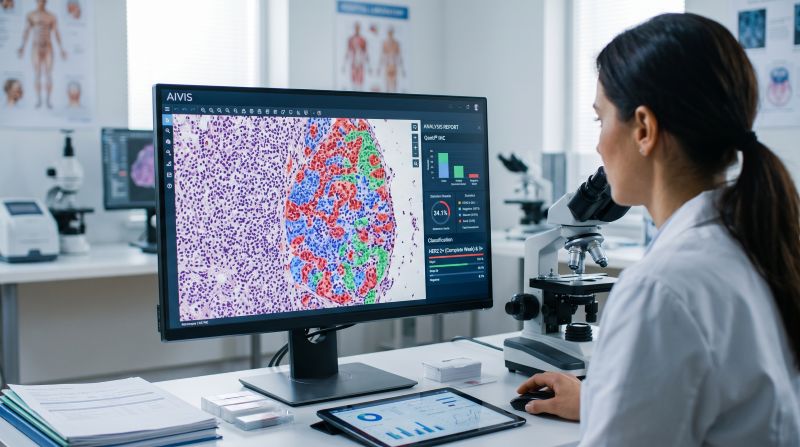
While targeted oncology and antibody-drug conjugates (ADCs) continue to transform cancer treatment, patient stratification remains constrained by a major clinical bottleneck: the subjective, visual evaluation of pathology biomarkers. Traditional immunohistochemistry (IHC) scoring relies heavily on manual microscopic observation, introducing significant inter-observer variability. This diagnostic discrepancy is particularly acute for next-generation therapies that target HER2 'ultralow' expression, where pathologist concordance historically drops to the 30–40% range—leaving eligible patients at risk of missing critical therapeutic windows. Medical AI innovator AIVIS resolves this diagnostic deficit by converting subjective visual interpretation into reproducible, quantitative numerical measurement.
🛰️ Sub-Cellular Precision Engine & Scanner-Agnostic Architecture
To overcome the physical and perceptual limits of manual pathology, AIVIS engineered an enterprise-grade AI architecture designed for standardized biomarker quantification:
-
Ultra-Refined Datasets & Rapid WSI-Level Inference: Built on a proprietary training dataset of over 200,000 whole-slide images (WSIs) and 50 million cell-level annotations curated by more than 10 full-time in-house pathologists, the 'Qanti AI' engine delivers rapid whole-slide inference, quantitatively analyzing over 3 million cells in under 3 minutes.
-
Style-GAN Vendor-Agnostic Normalization: Addressing the color and resolution discrepancies caused by diverse hospital hardware (including Philips, Roche, Leica, and Hamamatsu), AIVIS deploys a proprietary Style-GAN generative model that standardizes whole-slide images to maintain consistent diagnostic accuracy across multi-center environments.
-
Regulatory Clearance for HER2 Ultralow Detection: The company’s flagship Software as a Medical Device (SaMD), 'Qanti® IHC', is South Korea’s only MFDS-cleared solution validated to quantify HER2 low and ultralow expression. In nationwide multi-center clinical studies, AI assistance elevated inter-pathologist diagnostic concordance from 44.9% to 75.2%, boosting ultralow diagnostic accuracy to 86%.
🤖 Global Enterprise Partnerships & ADC Drug Discovery Platform
AIVIS is scaling beyond hospital diagnostic assistance into a data-driven, recurring-revenue platform for biopharma drug development:
-
Commercial Traction & Tier-1 Global Alliances: Capturing 25% of the domestic hospital pathology market within a single year of regulatory approval, AIVIS is rapidly establishing global channels. The company executed a commercial software licensing agreement with Philips and formed a strategic partnership with AstraZeneca to establish an AI-driven HER2 diagnostic ecosystem across clinical workflows.
-
End-to-End ADC Research via 'Qanti® Discovery': Extending its technology stack to optimize drug development, AIVIS launched 'Qanti® Discovery' to refine patient stratification and biomarker cutoff calibration for ADC clinical trials. The company is actively collaborating with Samsung Medical Center spin-off AimedBio to de-risk clinical development through cell-level predictive biomarker modeling.
By transforming subjective pathology scoring into standardized, high-precision telemetry, AIVIS is establishing a technological moat that bridges hospital diagnostics with precision biopharma R&D.
|
|
|
Decoding Korean Innovation |
|
|
Korea Launches 'Defense AX Centers' to Scale Civil-Military AI Co-Innovation |
|
|
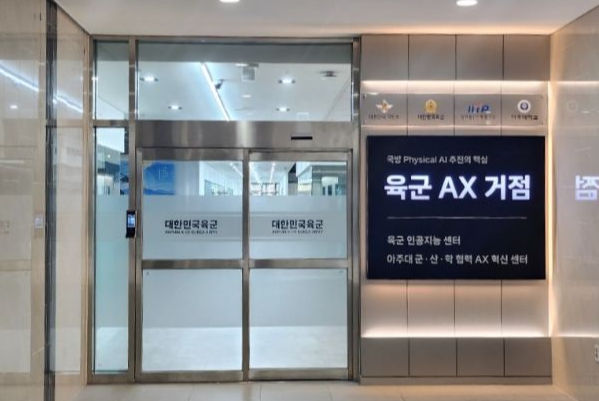
On October 12, South Korea’s Ministry of National Defense inaugurated the nation's first 'Defense AI Transformation (AX) Center' in Pangyo Techno Valley. Designed as a collaborative nexus where military operational demands intersect with civilian technological expertise, the initiative establishes a government-backed framework to accelerate the dual-use application of artificial intelligence and robotics.
🌐 Data Safe Zones & Physical AI Validation
The flagship Pangyo AX Center, operated in partnership with Ajou University, specifically targets 'Physical AI' applications by bridging the gap between classified military infrastructure and private-sector innovation:
-
Military Data Access via 'Safe Zones': To overcome the structural barriers of classified information, the center features isolated 'Data Safe Zones.' This secure architecture grants pre-vetted private institutions and tech enterprises unprecedented access to sensitive military data for algorithm training without risking security breaches.
-
De-risking Defense Robotics: The initial data pipelines are dedicated to training humanoids and multi-legged robots. By integrating real-world military field data, these physical AI systems are optimized to execute high-risk, autonomous operations, including advanced bomb disposal, CBRN (Chemical, Biological, Radiological, and Nuclear) reconnaissance, and mine clearance, thereby minimizing human casualty risks.
⚙️ Scaling a Nationwide Dual-Use Innovation Network
Following the Pangyo launch, the Ministry plans to roll out four additional specialized AX hubs across South Korea in partnership with leading research universities. This phased expansion will establish domain-specific centers dedicated to Command and Control (Korea Univ.), Agentic AI (KAIST), maritime operations (UNIST), and aerospace validation (Seoul National Univ.), building an integrated national network for civil-military tech co-development.
🚀 Accelerating Dual-Use Innovation via Real-World Testbeds
By bridging operational defense needs with cutting-edge private-sector technology, the Defense AX initiative provides a high-stakes testbed for validating advanced physical AI and autonomous robotics in real-world operating environments. Through secure data environments and inter-disciplinary collaboration across academia, industry, and the armed forces, South Korea aims to systematically accelerate the adoption of frontier AI across critical public and defense operations.
|
|
|
4F, Startup Campus Building #3, 20, Pangyo-ro 289Beon-gil, Bundang-gu, Seongnam-si, Gyeonggi-do Korea 13488
You are receiving this email because you have visited our site or asked us about regular newsletter.
|
|
|
|
|